What can we help you with?
Keeping Pipe Organs Alive
- Providing technical services since 1999
- Manufacturer-independent assessment and recommendations
- Tuning, maintenance, repair, restoration, rebuilding and installation
- Expertise across pipework, wind systems, windchests, consoles and control systems
- A direct W-2 workforce for primary service, with third-party specialists used in collaboration with customers when unique projects require additional domain expertise
- In-house apprenticeship program for developing the next generation of pipe-organ technicians
- Written findings, work records and closeout documentation to support long-term continuity of instrument care
- Flat monthly billing programs offered for recurring tuning and maintenance
- National service coverage and long-term care relationships
Phone: +1 (888) 561-9121
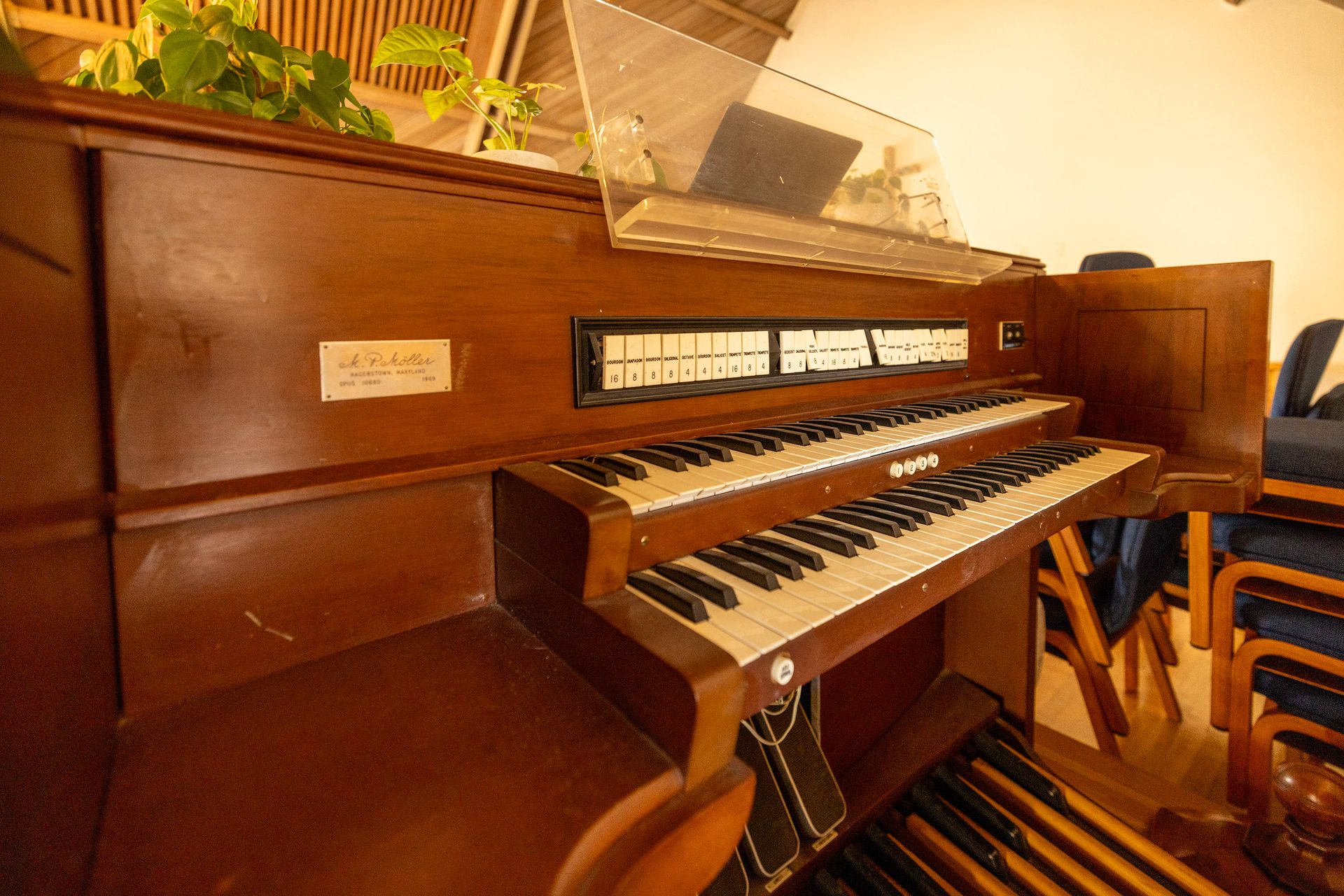
Möller Opus 10689
Craftsman Pipe Organs is preparing to remove and restore Möller Opus 10689, a six-rank organ built in 1969 for Holy Trinity Episcopal Church in San Diego. Its planned next home is a composer’s studio, where it will be used for making and recording music.
We’re excited to give this instrument another working life. We also intend to make the restoration a teaching project, with apprentices working alongside experienced technicians from removal through installation and the first recording.
This is the first entry in our project journal. We’ll follow the organ from its San Diego home into our workshop, document the restoration and share the work that goes into getting it playing again.
Historical catalog information: Organ Historical Society Pipe Organ Database, Möller Opus 10689, record 39318.
Craftsman Pipe Organs is a proud member of the Organ Historical Society.
Starting with Möller’s original drawings
- Drawing 101
- October 6, 1969
- Drawing 102
- Great organ’s steel supports
Before the removal, we’re reviewing the factory drawings alongside the instrument’s historical records.
Drawing 101 is dated October 6, 1969, with approval entries later that month and a revision in November. It shows how Möller arranged the organ within the church: the Swell in a chamber above the entrance area, the Great projecting in front and the blower in a separate room below.
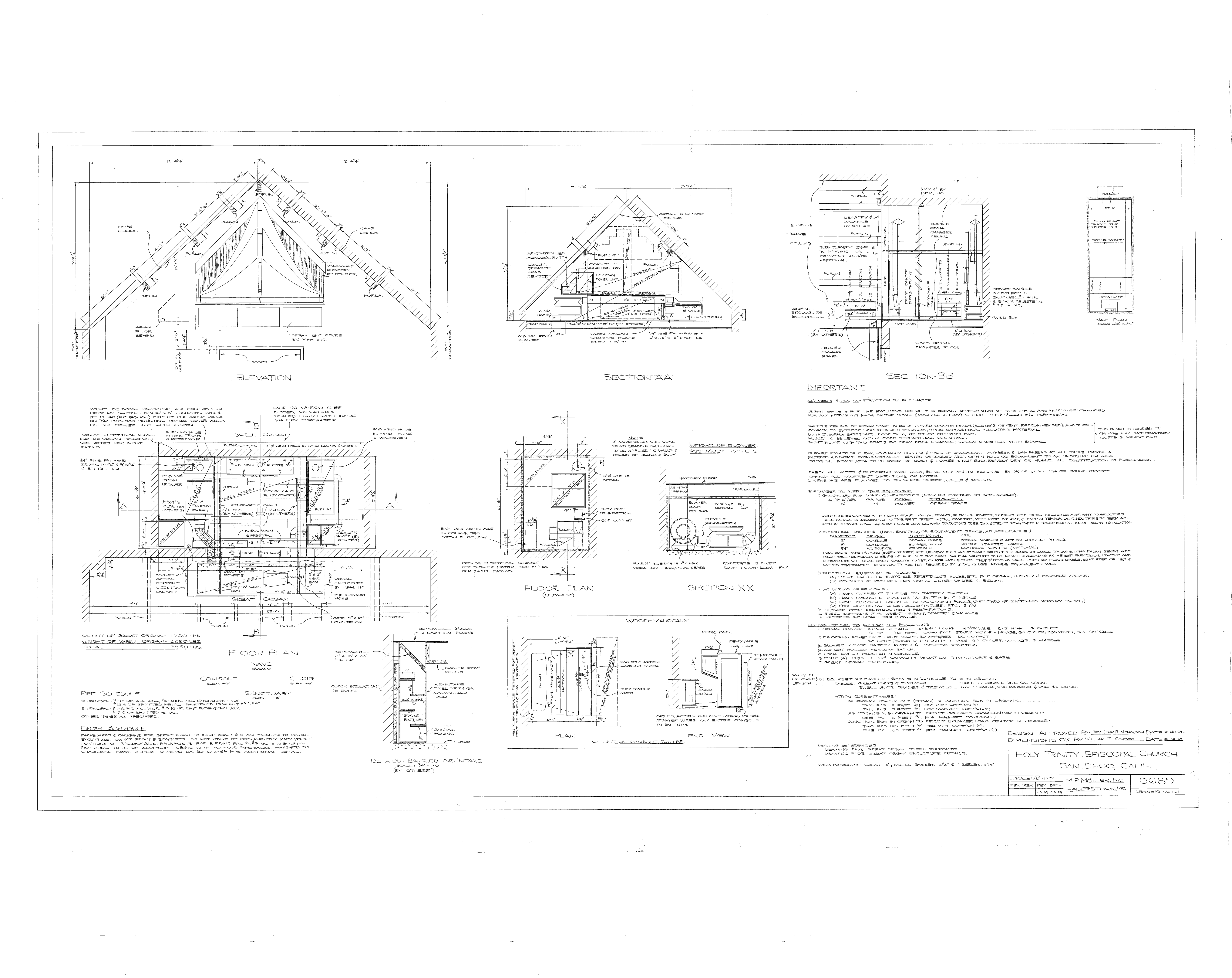
The sheet also records component weights, cable routes, pipe materials and wind pressures. Those details help us prepare for the work and give us an original reference to compare with the instrument on site.
We also have Drawing 102, which covers the Great organ’s steel supports. We’ll take a closer look at that drawing in a separate post as we explain the removal planning.
Preparing for removal in San Diego
Our first task is to document the organ as it stands and plan its removal from the building. The original drawings are valuable, but we’ll check the actual supports, access and component arrangement before work begins.
We’ll record the instrument’s condition and identify the work needed in the shop. Keeping that record alongside the factory drawings will help us follow both the original construction and any changes made during its years of service.
The removal will be the next installment in this series, with photographs and notes from the work in San Diego.
What we plan to do in the workshop
The planned restoration includes re-leathering, console and relay work, and construction of a new swell box for the next installation.
We’ll document what we find as the work progresses: which components can be retained, what needs repair and where replacement parts are needed. Later posts will show the individual jobs in enough detail to explain how they affect the instrument’s operation.
Once the restoration is complete, the plan is to install the organ in a composer’s studio and make its first recording in that new setting.
Bringing apprentices through the whole project
We want apprentices to take part in more than one stage of the work. Removing an organ, rebuilding its components and returning it to service offer different lessons, and seeing them together helps explain how the whole instrument works.
Experienced technicians will guide the work through removal, re-leathering, console and relay work, and installation. The project journal will follow that process too, including the decisions and discoveries along the way.
For someone learning the trade, hearing an instrument play after helping restore it is a milestone we’re looking forward to sharing.
A new home and more music ahead
Craftsman’s goal is to keep as many pipe organs in use as possible. For Opus 10689, the planned studio installation means a new place to be played, recorded and heard.
There is plenty of work between the factory drawings on our desk and that first recording. We’ll share it as we go, starting with the removal planning and the work in San Diego.