What can we help you with?
Keeping Pipe Organs Alive
- Providing technical services since 1999
- Manufacturer-independent assessment and recommendations
- Tuning, maintenance, repair, restoration, rebuilding and installation
- Expertise across pipework, wind systems, windchests, consoles and control systems
- A direct W-2 workforce for primary service, with third-party specialists used in collaboration with customers when unique projects require additional domain expertise
- In-house apprenticeship program for developing the next generation of pipe-organ technicians
- Written findings, work records and closeout documentation to support long-term continuity of instrument care
- Flat monthly billing programs offered for recurring tuning and maintenance
- National service coverage and long-term care relationships
Phone: +1 (888) 561-9121
Direct-Workforce Service
Craftsman Pipe Organs provides tuning, maintenance, repair, restoration and installation through a primarily in-house W-2 workforce. Our technicians are Craftsman employees, and our apprentices learn through paid workshop and field work.
Craftsman coordinates the team and remains your point of contact throughout the work.
A team drawn from several trades
Pipe organ work combines woodworking, metalworking, leatherwork, mechanical systems, electrical controls and musical judgment. Our workforce brings experienced organ technicians together with apprentices and technicians from related trades.
We assign work according to training and experience. Specialist work is assigned to qualified staff.
Apprenticeship and supervision
Apprentices learn through workshop preparation, component work, installation and service, with tasks assigned according to their training and supervised by experienced technicians.
The project documents identify who performs each part of the scope, including any outside specialists.
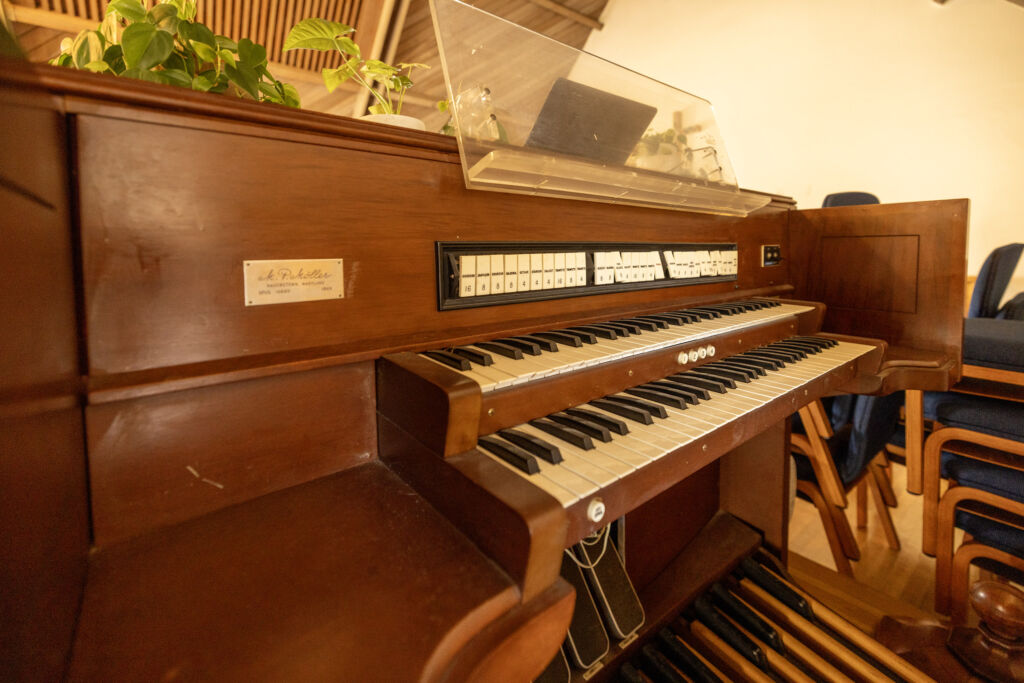
Our restoration of Möller Opus 10689 includes a plan for apprentices to work alongside experienced technicians through the restoration and installation. The project journal follows the work.
For employment and training opportunities, see pipe organ technician careers.
Workshop preparation and field work
We manufacture new pouchboards in-house using CNC equipment and assemble replacement primary actions in our workshop. Preparing compatible assemblies before a site visit reduces fabrication at the instrument and shortens downtime.
The project determines what can be completed in the workshop and what must be fitted, adjusted or tested on-site. For larger repairs, we identify which sections can be worked on separately and when the instrument will be unavailable.
Our restoration and rebuilding services explain re-leathering, replacement assemblies and staged work.
Outside specialists and manufacturer support
Some projects require expertise beyond the assigned organ team. Electrical, structural, rigging, engineering and permitting requirements are reviewed for the particular project, with responsibilities identified in the scope.
When outside specialists are needed, we explain their involvement and coordinate their work directly with your facility. We also work with equipment manufacturers when factory parts, documentation or technical support are required.
We make manufacturer-independent recommendations based on the instrument’s condition and service needs.
Agreeing on the work
We review the instrument, the reported problems, available records and your requirements before preparing a proposal. We confirm any assessment charges before arranging a visit. The proposal identifies the work, price, staffing, schedule and anticipated downtime.
Access, working hours and important service or performance dates are coordinated with your facility. Where work can be staged, we explain what each stage includes and how it affects use of the organ.
If opening the instrument reveals additional work, we explain the finding and obtain the required approval before adding it.
Records that stay with the instrument
Written findings and work records preserve what was learned, repaired or changed. At completion, we provide the documentation agreed for the project, together with recommendations for continued care.
These records help the next technician, organist or committee understand the instrument without starting again. Read about our project documentation and closeout.
For recurring service or institutions responsible for several instruments, see our national and multi-instrument service programs.
Frequently Asked Questions
Apprentices may participate as part of the assigned team, working under experienced supervision on tasks appropriate to their training. Specialist tasks are assigned to qualified staff.
Our own employees perform our primary service work. When a project needs outside expertise, we coordinate that work with your facility and identify the specialist’s responsibilities in the project scope.
Yes. When organ work involves building systems, rigging or other trades, we coordinate responsibilities and scheduling with your facility and the contractors involved.