What can we help you with?
Keeping Pipe Organs Alive
- Providing technical services since 1999
- Manufacturer-independent assessment and recommendations
- Tuning, maintenance, repair, restoration, rebuilding and installation
- Expertise across pipework, wind systems, windchests, consoles and control systems
- A direct W-2 workforce for primary service, with third-party specialists used in collaboration with customers when unique projects require additional domain expertise
- In-house apprenticeship program for developing the next generation of pipe-organ technicians
- Written findings, work records and closeout documentation to support long-term continuity of instrument care
- Flat monthly billing programs offered for recurring tuning and maintenance
- National service coverage and long-term care relationships
Dallas: 214-702-4307
Fort Worth: 817-952-6728
Möller Organ Service in Dallas–Fort Worth
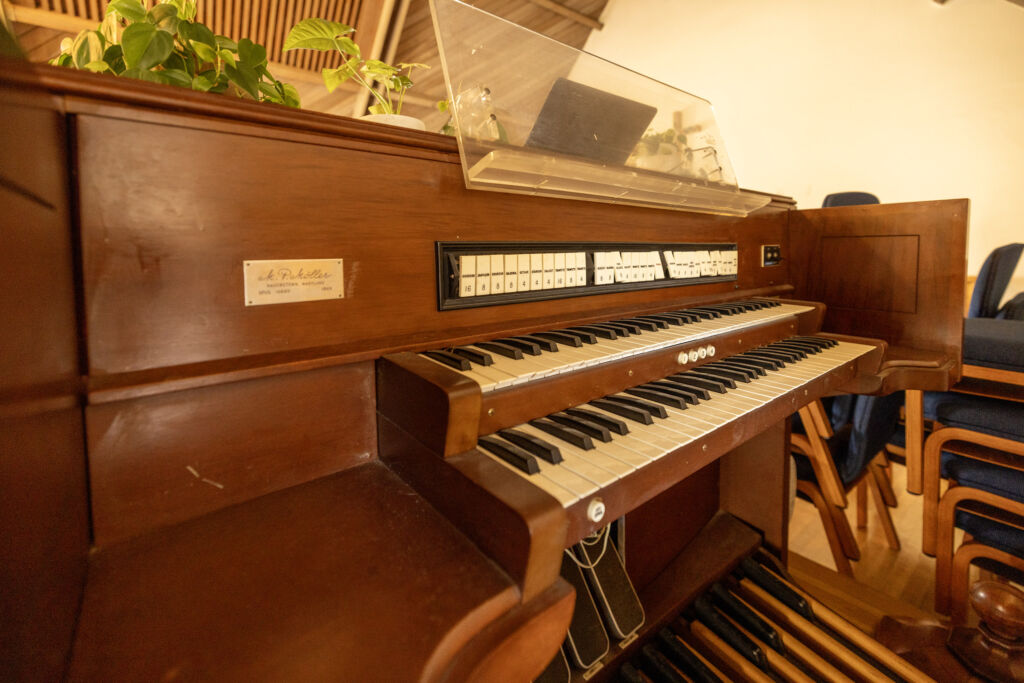
Craftsman Pipe Organs provides tuning, maintenance, condition surveys, repair and re-leathering for Möller pipe organs in Dallas–Fort Worth, Texas. We repair windchests, wind systems, pipework, consoles and controls, whether the organ is original or has been rebuilt or modified since it was installed.
Call 214-702-4307 for Dallas or 817-952-6728 for Fort Worth, or email projects@craftsmanpipeorgans.com.
Möller pipe organ re-leathering
Worn leather is the most common problem we find in Möller organs. It can cause ciphers (notes that keep sounding after the key is released), dead notes, wind leaks and stops that won’t come on.
How long leather lasts
Organ leather generally lasts 30–50 years, depending on use, previous repairs and the building’s climate. Long periods of dry, heated air and large humidity swings are especially hard on it. Many older Möller instruments still operating with their original leather are now due for re-leathering.
In-house pouchboards and assemblies
Craftsman makes new pouchboards in-house on CNC equipment, which holds tighter tolerances than the original manufacturing methods did. We build replacement primary action assemblies in our workshop with magnets recovered from original Möller cores. We keep finished assemblies in stock, so compatible units can be exchanged in 1–2 days. That lowers the cost of re-leathering and keeps downtime short.
Pouch forming
We use custom tooling to form each leather pouch with precisely controlled slack, following Möller’s original factory method. The consistent pouch formation helps restore even response from note to note and dependable air sealing, with the goal of factory-like longevity.
Staged re-leathering
Because most of a Möller organ’s ranks use standard-sized pouchboards, Craftsman can stage re-leathering without taking the entire instrument out of service. We swap compatible assemblies for stocked replacements and isolate only the sections that need custom work in our shop. The remaining ranks stay playable while those assemblies are rebuilt.
Service for original and rebuilt Möller organs
Send whatever records you have, along with a description of the problem. Useful information includes:
- Möller opus number, nameplate information and original specifications.
- Factory contracts or installation records.
- Console information.
- Records of rebuilding, service, modification or relocation.
- Later console or control-system work.
Arrange an assessment or service visit
Tell us what your Möller organ needs. We’ll evaluate its condition and send you a proposal with the recommended work and cost.
Our in-house W-2 technicians do the work. If a project needs outside subcontractors, we coordinate them directly with your facility.
Call 214-702-4307 for Dallas or 817-952-6728 for Fort Worth, or email projects@craftsmanpipeorgans.com.
Frequently Asked Questions
Yes, apart from the ranks being rebuilt. We stage the work: compatible standard-sized assemblies are exchanged in 1–2 days for units built in our workshop with new pouchboards and leatherwork made to Möller’s original factory specifications.
While the custom-sized assemblies are finished in the workshop, we shut off the wind to those sections so the rest of the organ stays playable.
Yes. We assess the original components and the later work together, including replacement consoles, updated controls and changes to the pipework or wind system. Records of that later work help us see what’s installed and what needs attention.
No. Send whatever records you have, including the opus number and nameplate information if available. We’ll get the original build documents ourselves when we plan the work.
No. We can identify the organ on-site and get the right documentation for it.
Yes. Our goal is to keep as many pipe organs in use as possible. When an organ has to be removed, we look for a new home for it and keep you updated as it’s restored and rehomed.
If the organ was donated or left to the church through a family bequest, we can also share those updates with family members who want to follow its progress.